The Happy Face Smile Font
A Seasonal Embroidery Designer’s First Look
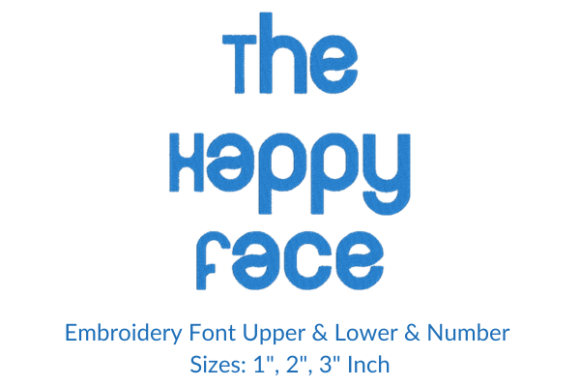
As an embroidery designer who builds seasonal collections for real holiday shoppers—not just catalog mockups—I opened The Happy Face Smile Font with one question in mind: *Does this font spark joy, not just legibility?* The answer is yes—immediately. It carries a warm, approachable cheer that lands somewhere between playful and heartfelt: think family photos on Christmas morning, birthday brunch napkins, or back-to-school tote bags that feel personal, not generic. It’s not overly cutesy, nor is it minimalist to the point of coldness. Instead, it balances rounded letterforms with subtle expressive details—a gentle upward curve in the “S,” soft terminal flicks, and consistent baseline rhythm—that make it feel handmade, even when stitched by machine.
Where This Font Shines in Holiday & Seasonal Product Lines
The Happy Face Smile Font thrives where emotional connection drives purchase decisions. For Etsy sellers and small shop owners, that means high-conversion items like:
- Sweatshirt embroidery for family matching sets—especially in fall and winter, where its friendly tone softens bulkier fabrics;
- Tote bag design for teacher appreciation, graduation, or holiday market shopping—its clarity reads well at mid-size (3–4 inches wide) without needing extra fill stitches;
- Kitchen towel embroidery and pillow cover lettering—its open spacing prevents thread crowding on terry cloth or linen blends;
- Embroidered patch applications for backpacks, jackets, or baby onesies—where its compact yet expressive shape holds up beautifully when fused and washed;
- Personalized gift tags, ornaments, and table linens—its inherent warmth supports gifting intent without needing extra embellishment.
In product mockups and social media previews, The Happy Face Smile Font consistently lifts engagement. Buyers pause longer on listings using it for names (“Emma’s First Day of School”) or short quotes (“Joy is Here” or “Made With Love”). That pause translates directly to cart adds during peak holiday shopping windows.
Real-World Considerations for Embroidery Sellers
This isn’t just about aesthetics—it’s about execution. As a working embroidery designer, I always ask: *Will this hold up across my production workflow?* Here’s how The Happy Face Smile Font performs under pressure:
- Hoop size & stitch density: It’s designed for readability—not maximal detail—so it avoids excessive underlay or dense satin columns. That makes it forgiving on standard 4×4 hoops and reliable on home embroidery machines.
- Fabric texture matters: On thick kitchen towels or fuzzy fleece, use medium-weight cutaway stabilizer and reduce top tension slightly. On stretchy garments (like cotton-poly blend tees), add lightweight tear-away + topping for clean letter edges.
- Thread colors & contrast: Test on both light and dark fabric before finalizing your color palette. Its curves pop best with solid, matte threads—avoid highly reflective metallics unless you’re stitching large-scale versions (6+ inches) where detail won’t blur.
- Small lettering warning: Below 0.75 inches tall, some terminals may lose definition—especially on curved surfaces like caps or mugs with wrap-around embroidery. Stick to 1-inch minimum for clear recognition.
Why It Strengthens Your Seasonal Brand—Without Extra Work
For small business owners juggling inventory, mockups, and holiday deadlines, The Happy Face Smile Font delivers quiet brand value. It doesn’t scream “trendy”—it feels timeless enough for Easter bunnies, July 4th picnics, and December stockings alike. That consistency helps buyers recognize your shop’s voice across categories: a pillow cover says “Home Sweet Home,” a baby bib says “Little Joy,” and a school-themed apron says “Future Scientist”—all unified by tone, not theme.
That emotional continuity builds customer trust. When shoppers see The Happy Face Smile Font on your packaging, social posts, or printable mockup graphics, they subconsciously associate your shop with warmth, care, and attention to feeling—not just function. In crowded Etsy search results or craft fair aisles, that distinction is what turns browsers into repeat buyers.
Practical Designer Notes Before You Launch
Before adding The Happy Face Smile Font to your next seasonal drop, run these checks:
- Confirm commercial licensing—especially if selling finished products (not just digital embroidery files). Verify whether resale rights cover physical goods like embroidered sweatshirts or personalized gifts.
- Test stitch density on your target fabric—run a 3-inch sample on actual kitchen towel, fleece, or twill before batching orders.
- Create realistic mockups using your own product photos—not just stock backgrounds. Show how the font looks on a real tote bag in natural light, not just a white studio render.
- Plan matching color palettes ahead of time: choose 3–4 thread colors that work across light/dark fabrics and pair well with your seasonal branding (e.g., sage + cream for spring; cranberry + oat for winter).
- Review small details post-stitch: check terminals, junctions, and curves under magnification—especially after washing a test piece. What looks crisp on screen may soften with wear.
Remember: The Happy Face Smile Font is more than a machine embroidery design—it’s a tool for human connection. Used thoughtfully, it turns everyday items into handmade gift moments: a child’s first-day-of-school apron, a teacher’s holiday thank-you towel, or a family’s matching ornament set. In the rush of seasonal production, fonts like this remind us why people choose embroidery over print—they want something that feels seen, chosen, and full of heart.